What is aphasia?
Aphasia happens when a stroke damages the language part of the brain. This makes it hard for someone to communicate.
If your stroke affected the area in your brain that controls speech and language, you may have difficulty with communication. Your communication problems can affect your language (aphasia), speech (dysarthria or apraxia of speech), or the way you think about
language (cognitive communication).
Communication impairments affect people in different ways. You may find it harder to:
- express your thoughts
- speak clearly
- understand what others say
- Read
- Write
Aphasia is a problem with language. It does not affect:
- Thinking
- Planning
- Decision-making
Watch this video to learn more about what aphasia is:
Video credit: Lakeridge Health
How can I communicate more easily if I have aphasia?
There are many things you can do and tools you can use to communicate.
Here are some ideas you can try:
- Let people know you have had a stroke. Tell them you need more time to express yourself.
- Practice communicating with family and close friends
- Practice communicating with 1 other person in a quiet room. As you get more comfortable, practice in different settings with different people.
- Use a special computer
- Use a communication board or book with pictures or photos of common phrases and topics that are important to you
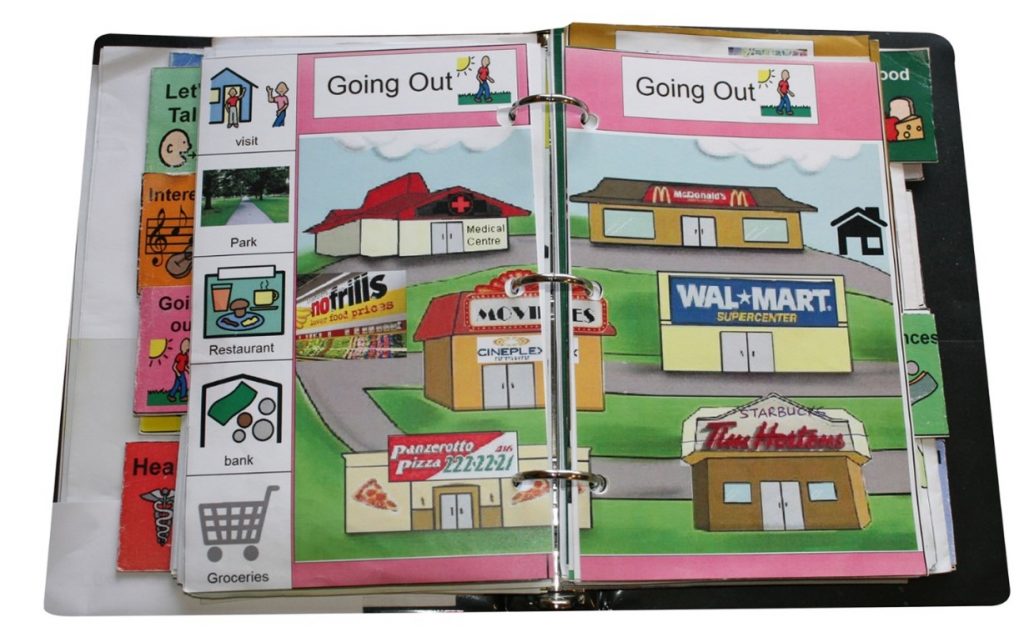
If you would like to find out if a communication board or book or special computer can help you, talk to your Speech-Language Pathologist. You can also ask your healthcare team to refer you to an Augmentative and Alternative Communication Clinic.
Augmentative and Alternative Communication (AAC) is a term used to describe different ways to communicate besides talking. AAC includes gestures, strategies, materials or technology to help people communicate more easily. With help from the speech-language
pathologist, you can learn what works best for you. Your family and caregivers can also learn how to better communicate with you.
AAC clinics can help:
- Test to see how the stroke has affected your ability to communicate
- Recommend special communication equipment
- Teach you how to use the equipment
Ask your healthcare team for a referral to an AAC clinic near you.
How can I practice communicating with others?
You may find it helpful to join an aphasia or stroke support group. These groups provide a supportive setting for people with communication impairments to practice skills so they can more fully participate in daily activities.
Here is a list of some local aphasia centres in the Greater Toronto Area:
- The Aphasia Institute
- Halton-Peel Community Aphasia Programs
- March of Dimes: Aphasia and Communication Disabilities Program
How can I communicate more easily with my loved one who has aphasia?
What you can do as a caregiver:
- Keep information simple
- Ask simple yes/no questions
- Break down instructions into simple steps
- Give time for them to express themselves and to process information
- Speak naturally, using normal volume and an adult tone of voice
- Acknowledge their frustration or fear of not being understood by saying, “I know you know what you want to say but are having trouble finding the right words.”
- Use short phrases, gestures that are easily understood or pictures
- Write down key words
- Provide choices
- Double-check to make sure you have understood them
Having read the information in this section, consider the following:
- Can I communicate my needs and wishes so that I am understood?
- Can my family and close friends communicate well with me?
- Do I know how to tell people that I have difficulty communicating?
- Can I join in on social situations?
- Do I need any special supports (for example: a computer or communication board) to help me communicate?
Where to get more information, help and support:
Centralized Communication Equipment Pool
Assistive Technology Clinic
Toronto Rehab, Bickle Centre: Augmentative and Alternative Communication Clinic
College of Audiologists and Speech-Language Pathologists of Ontario
Speech-Language & Audiology Canada